
Why the Obsession with Picture Perfection?
Every time the screen flickers to life—whether it’s your living-room TV showcasing a blockbuster or the ultrawide monitor on your desk revealing a freshly rendered design—you feel an unmistakable spark of anticipation. The category of Displays has never been just about pixels; it’s about the emotions triggered by color gradients, the goosebumps raised by inky blacks, and the immersion that only flawless motion can deliver. That’s where the ritual of the Display test enters the picture: a carefully choreographed set of evaluations built to expose subtle imperfections and celebrate technological triumphs.
TVs: Home Theaters and the Pursuit of Cinema Authenticity
In the TV realm, technic and storytelling merge. Modern OLED and Mini-LED panels can recreate the filmmaker’s vision with stunning fidelity—if, and only if, the hardware is tuned correctly. A proper Display test checks peak brightness for HDR highlights, verifies color temperature so skin tones don’t skew too warm, and scrutinizes local dimming to prevent blooming around bright subtitles set against star-studded skies. Enthusiasts often cue up test patterns with overexposed whites and near-black shadows, hunting for banding that can break the cinematic spell. When calibrated, these televisions dissolve the boundary between couch and cinema hall, letting you forget the room behind you entirely.
Monitors: Precision Instruments for Creative Minds
If TVs are about escapism, monitors are about precision. Graphic designers, video editors, and competitive gamers all rely on crystal-clear visualization to make split-second decisions. A single inaccurate hue might ruin a brand palette; a fraction of input lag might cost an esports match. Running a Display test on a monitor starts with uniformity sweeps—examining whether every inch of the panel maintains consistent brightness. Next comes color-gamut verification: does the monitor truly cover 99% DCI-P3, or is it marketing bravado? Add refresh-rate integrity checks to ensure that 165 Hz is genuinely 165 Hz, not a frame skipping illusion. Only when these metrics pass does a monitor graduate from ordinary screen to trusted creative partner.
The Technic Behind the Scenes
Under the glass sits a dance of quantum dots, organic compounds, and transistors measured in nanometers. OLED pixels self-illuminate, granting perfect blacks at the cost of potential burn-in if static UI elements linger. Mini-LED backlights deploy thousands of microscopic LEDs, each individually addressable, to approach OLED contrast while retaining LCD’s longevity. IPS technology offers superior viewing angles, VA boasts deep contrast for darker rooms, and the new generation of QD-OLED fuses quantum dots with emissive layers for a best-of-both-worlds solution. A thorough Display test doesn’t just assign a pass or fail; it maps out how each technic shines or struggles under different content, room lighting, and usage habits.
Visualization Tools: From Patterns to Professional Probes
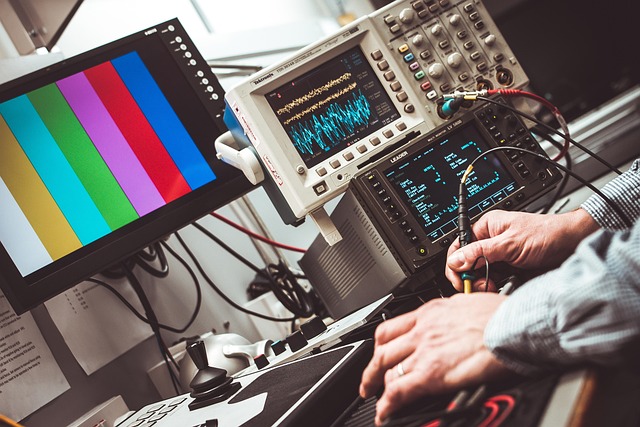
While enthusiasts might stream YouTube calibration videos, professionals wield spectroradiometers and pattern generators that cost more than the displays they test. These tools sample thousands of color patches, analyze spectral power distributions, and reveal the display’s genetic code. Software then builds a corrective LUT (Lookup Table) that rewires the panel’s responses at the firmware level. Suddenly, reds aren’t just red—they are the exact shade a photographer saw through her lens at sunset. Such meticulous visualization work transforms displays into portals of authenticity, where creative intent survives the journey from imagination to illuminated glass.
Cutting-edge Display Technology: Where We Go Next
Micro-LED looms on the horizon with modular tiles promising infinite canvas sizes and near-imperishable brightness. Electroluminescent quantum dots flirt with self-emissive, filter-free color reproduction. Even e-paper is evolving, targeting video-capable refresh rates for battery-sipping companions. Each technological leap resets the benchmark, compelling new iterations of the Display test to account for phenomena like transparent pixels or holographic overlays. As displays morph, our testing methods expand, yet the heart of the pursuit remains unchanged: to witness visuals so lifelike they transcend the screen itself.